- Parking spaces available
- Bus stop available
- Free admission
Borntosten
Various sights
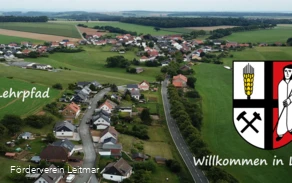
Borntosten, the smallest municipality in the city district in terms of population and area, is located on the western edge of the Waldeck Plateau. The landscape is distinctly plateau-like, with only moderately hilly terrain and elevation differences of no more than 50 m. Several very shallow meadow valleys carry water that flows only intermittently and drain northward toward the Glinde River.
Borntosten offers historical discoveries: first mentioned in 822, the town impresses with its hiking trails, a church, and a bell dating from 1786.
Borntosten offers historical discoveries: first mentioned in 822, the town impresses with its hiking trails, a church, and a bell dating from 1786.


Address
Borntosten
Zum Zollhaus 1
34431 Marsberg
Telephone: +49 2992 / 3388
Properties:
The town owes its name, Borntosten—formerly Ostheim—to a spring. This place name derives from the more recent term “born,” which refers to a spring or stream. Borntosten therefore means something like “the spring at Ostheim” or, literally, “born to the east”—the eastern spring, as opposed to a western one. In older documents, one still finds “Osthem” or “Oesthem” as earlier names for Borntosten, or for a deserted settlement near the present-day village, while in the 17th century the place is referred to as Ostenborn.
The ending “heim” suggests very early settlement, presumably as early as the Carolingian period. The first mention of the place Ostheim is found in 9th-century traditions, dating from after 822, and this likely already refers to present-day Borntosten. As early as 1279, there is mention of a farmstead in Ostheim that was granted as a fief to a certain de Eysbyke. In the centuries that followed, the estate in Osthem remained in the possession of citizens of Marsberg. In 1314, the entire estate passed into the hands of the von Büren family, citizens of Marsberg, after they had previously acquired half of the property by purchasing it from a Dietrich von Esbike. Subsequent documents also attest to these ownership arrangements. In 1353, the Bredelar Monastery asserted ownership of land along the river in Ostheim. In 1414, another farmstead in Ostheim passed into the monastery’s possession, and in the years that followed, the monastery continued to expand its land rights in the area. In 1482, the Raben von Canstein family is mentioned; they now appeared as owners of two shares of the tithe in Ostheim, which was divided into three shares in total. The House of Canstein had held land in Ostheim for quite some time, but in 1451 it transferred it to the Counts of Waldeck, who in turn sold the tithe to the Bredelar Monastery in 1482. In 1484, yet another hufe in Oistem, formerly owned by Brilon, passed to the monastery. In 1490, Borntosten is described as deserted. A year later, the Raben von Canstein succeeded in redeeming their mortgaged property. The village was likely resettled around 1500. This is indicated by the re-endowment of the Heddinghausen parish at the beginning of the century. For the period that followed until the mid-16th century, Borntosten belonged to the Canstein domain, which, however, in turn temporarily pledged it to Bredelar Abbey in 1515.
In the second half of the 16th century, the Corvey Abbey acquired, through a purchase from Waldeck, ownership of two portions of the tithe in Ostheim, which it continued to hold until the end of the 18th century and had regularly confirmed by the Prince of Waldeck.
The ending “heim” suggests very early settlement, presumably as early as the Carolingian period. The first mention of the place Ostheim is found in 9th-century traditions, dating from after 822, and this likely already refers to present-day Borntosten. As early as 1279, there is mention of a farmstead in Ostheim that was granted as a fief to a certain de Eysbyke. In the centuries that followed, the estate in Osthem remained in the possession of citizens of Marsberg. In 1314, the entire estate passed into the hands of the von Büren family, citizens of Marsberg, after they had previously acquired half of the property by purchasing it from a Dietrich von Esbike. Subsequent documents also attest to these ownership arrangements. In 1353, the Bredelar Monastery asserted ownership of land along the river in Ostheim. In 1414, another farmstead in Ostheim passed into the monastery’s possession, and in the years that followed, the monastery continued to expand its land rights in the area. In 1482, the Raben von Canstein family is mentioned; they now appeared as owners of two shares of the tithe in Ostheim, which was divided into three shares in total. The House of Canstein had held land in Ostheim for quite some time, but in 1451 it transferred it to the Counts of Waldeck, who in turn sold the tithe to the Bredelar Monastery in 1482. In 1484, yet another hufe in Oistem, formerly owned by Brilon, passed to the monastery. In 1490, Borntosten is described as deserted. A year later, the Raben von Canstein succeeded in redeeming their mortgaged property. The village was likely resettled around 1500. This is indicated by the re-endowment of the Heddinghausen parish at the beginning of the century. For the period that followed until the mid-16th century, Borntosten belonged to the Canstein domain, which, however, in turn temporarily pledged it to Bredelar Abbey in 1515.
In the second half of the 16th century, the Corvey Abbey acquired, through a purchase from Waldeck, ownership of two portions of the tithe in Ostheim, which it continued to hold until the end of the 18th century and had regularly confirmed by the Prince of Waldeck.
Directions
from Marsberg train station bus route 497 You can get to Marsberg ... ... by car: A44 Dortmund-Kassel (Marsberg junction, Lichtenau junction) B7 Chemnitz-Düsseldorf (direct connection) A33 Paderborn-Osnabrück (about 30 minutes) B252 Blomberg-Marburg (about 20 minutes) A7 Kassel-Hannover (about 60 minutes) ... by train: Dortmund-Sauerland-Express (Warburg-Dortmund) Three stops in Marsberg: Bredelar, (Nieder-)Marsberg, Westheim The train runs every hour Direct connection to the IC/ICE stations in Warburg and Dortmund